

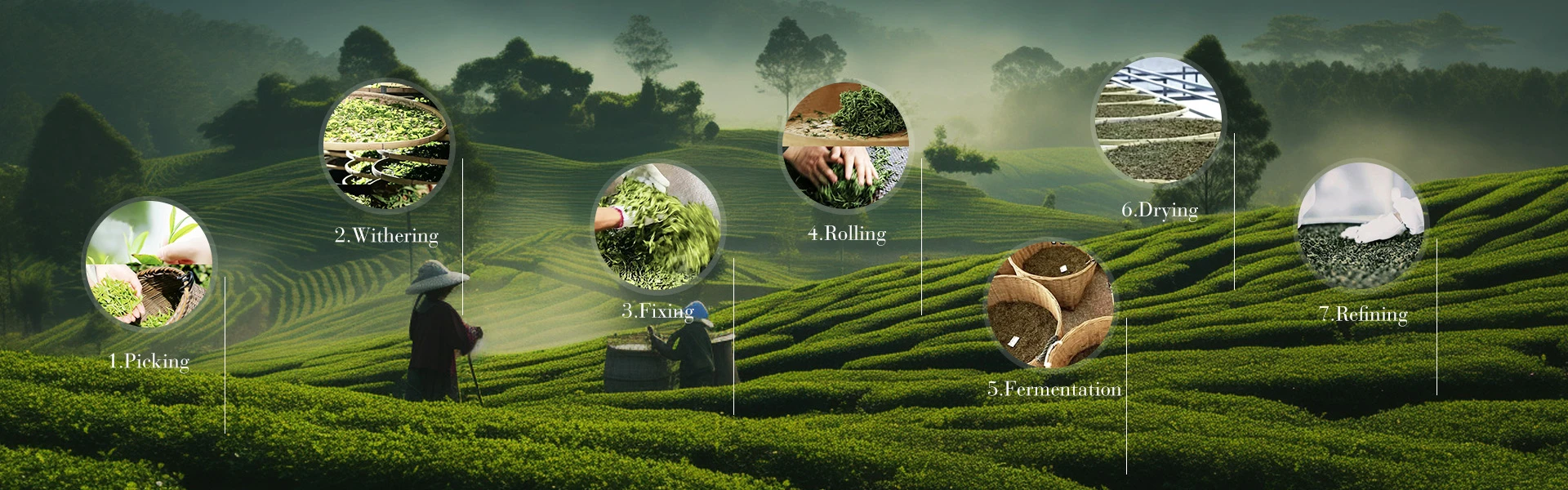
Importing wholesale loose tea directly from Chinese agricultural origins requires navigating strict pesticide residue thresholds, volatile moisture retention levels, and batch-to-batch flavor inconsistencies. Overseas brand owners, boba chain buyers, and distributor procurement teams often face unexpected container rejections at customs or margin erosion due to unstandardized cut sizes and high shipping volumes. Direct plantation integration and factory-level processing controls eliminate these commercial vulnerabilities by enforcing measurable quality protocols from raw leaf plucking to final export container loading.
Key Takeaways for Tea Buyers & Brand Managers
Regulatory Compliance Thresholds: EU MRL regulation (EC No 396/2005) mandates less than 0.01 mg/kg limit for over 500 pesticide compounds, including Anthraquinone and Imidacloprid.
Moisture & Storage Stability: Commercial export specifications require finished loose tea moisture levels strictly under 6.5% to prevent hydrolytic degradation, mold spore germination, and shelf-life loss during 30+ day ocean transit.
Yield & Cut Efficiency: Custom particle sizing (from 2mm fannings to 15mm whole leaf) directly controls extraction velocity, liquid yield ratios, and automatic bag-packing machine efficiency for commercial brewing setups.
Primary Loose Tea Categories: Processing Specs and Grading
China's commercial Camellia sinensis output spans distinct oxidation spectrums, biochemical profiles, and physical leaf formats. Sourcing directly from an established loose tea manufacturer china gives buyers precise control over catechin concentrations, volatile aromatic compounds, and physical particle dimensions required for specific end-use applications (RTD beverages, pyramid tea bags, or premium loose tin packaging).
Oolong Tea (Semi-Oxidized: 15% to 70%)
Oolong teas balance the floral top-notes of green tea with the heavy body of black tea through controlled solar lingering (Shai Qing) and mechanical bruising (Yao Qing).
Tieguanyin (Anxi, Fujian): Light oxidation (15–25%). Rolled tight-dragon ball shape. High in EGCG and linalool. Ideal for premium retail packaging and delicate milk tea bases requiring a strong orchid aroma.
Da Hong Pao / Wuyi Rock Tea (Fujian): Heavy charcoal roasting (Hong Bei) over 8–12 hours at 100–120°C. Delivers Pyrazines and smoky, mineral notes with 0% moisture regain during ocean transit. Excellent for RTD extraction and high-end restaurant service.
Four Seasons & High Mountain Oolong: Uniform ball-rolled grade with low stem ratios (<3%). Provides consistent high extraction yield across commercial pressure brewers.
Green Tea (Unoxidized: 0%)
Pan-firing (Chao Qing) or steaming (Zheng Qing) immediately inactivates polyphenol oxidase enzymes, preserving native chlorophyll, L-theanine, and antioxidant catechins.
Chunmee Green Tea (41022, 9371 grades): Eyebrow-shaped, dry-processed leaf with high astringency and low moisture (<6.0%). A dominant staple for West African and Middle Eastern bulk markets where boil-brewing with high sugar ratios is standard.
Gunpowder Green Tea (3505 grades): Pelleted form rolled under thermal pressure. High physical density increases container loading weight by up to 22% compared to open-leaf greens, reducing per-kilogram freight expenditure.
Jasmine Scented Green Tea: Natural night-flowering Jasminum sambac scenting (3 to 7 scenting cycles). Free from artificial flavor sprays, ensuring compliance with strict international food additive standards.
Black Tea (Fully Oxidized: 100%)
Complete enzymatic oxidation converts simple catechins into complex theaflavins (orange-red color, brightness) and thearubigins (depth, body, astringency).
Lapsang Souchong & Zheng Shan Xiao Zhong: Earthy, malt-forward profile. Leaves undergo thermal oxidation under controlled 28–32°C conditions. Serves as a strong base for commercial flavored blends and iced tea formulations.
Keemun Black Tea (Qimen, Anhui): Contains high concentrations of Geraniol, providing a signature wine-like, honeyed aroma. Clean cut grades (BOP/Fannings) allow fast 30-second extraction times in automated food service dispensers.
Yunnan Dianhong: Large-leaf (Camellia sinensis var. assamica) rich in golden tips and high total soluble solids. Adds deep color and robust mouthfeel to RTD formulations without requiring artificial color additives.
Core Standards for Evaluating Loose Tea Suppliers
Selecting reliable bulk tea suppliers demands a rigorous audit beyond initial sample tasting. Overseas importers must evaluate origin controls, laboratory infrastructure, physical sorting machinery, and traceability mechanisms to safeguard their brand reputation and product margins.
[Image Insert (Under H3: Core Standards for Evaluating Loose Tea Suppliers): Supply chain flow diagram detailing batch-level lot tracking from Fujian/Anhui plantation harvest to ISO22000 manufacturing and testing. | Alt: Traceability workflow for loose tea manufacturer china from raw harvest to EU MRL testing and export clearance. | Filename: loose-tea-manufacturer-china-traceability-workflow.jpg]
Direct Origin Access and Harvest Seasonality
Sourcing directly from mountain tea gardens across Fujian, Zhejiang, Anhui, and Yunnan ensures access to fresh first-flush (Spring) and second-flush (Summer/Autumn) harvests. Spring harvests deliver high amino acid profiles (L-theanine >2.5%) suitable for high-end retail, while Autumn harvests offer cost-effective, high-yield options for volume commercial blending. Direct origin procurement bypasses broker markups, shaving 12–18% off raw material acquisition costs.
Analytical Traceability and Regulatory Testing
A tier-one supplier must maintain batch-level traceability from specific garden lots to shipped export cartons. Quality control teams must perform internal testing and issue verified Certificate of Analysis (CoA) documentation covering three critical compliance vectors:
Pesticide Residue Management: Complete panel screening via GC-MS/MS and LC-MS/MS testing for EU MRLs, US FDA Food Safety Modernization Act (FSMA) standards, and Japan Positive List regulations.
Heavy Metal Containment: Strict monitoring of Lead (Pb <2.0 mg/kg), Arsenic (As <0.5 mg/kg), and Cadmium (Cd <0.2 mg/kg) via Inductively Coupled Plasma Mass Spectrometry (ICP-MS).
Microbiological Safety: Total Plate Count (<10,000 CFU/g), Yeast & Mold (<1,000 CFU/g), with complete zero-tolerance absence of Salmonella and E. coli in according with ISO22000 and HACCP food safety management protocols.
Mechanical Sorting and Physical Standardization
Raw tea contains natural variations in stem length, yellow leaf fragments, and dust. Leading manufacturing plants implement multi-stage mechanical refining lines:
Electrostatic Stem Selectors: Removes inactive wood fiber and dry stems, increasing total active soluble compound percentages.
CCD Color Sorters (320+ channels): Filters off-color particles, burnt leaves, and foreign material with 99.9% accuracy.
Laser Foreign Material Scanners & Metal Detectors: Eliminates physical contaminants (wind-blown debris, metallic micro-particles down to 0.8mm Ferrous / 1.0mm Non-Ferrous / 1.2mm Stainless Steel).
To explore operational parameters, industrial packaging formats, and factory-direct volume pricing, examine our comprehensive portfolio of wholesale loose tea options engineered for commercial scalability.
Technical Comparison: Procurement Supply Chain Pathways
Evaluating the operational and financial impact of direct factory sourcing versus traditional broker networks clarifies Total Cost of Ownership (TCO) advantages:
| Performance Metric | Direct Factory Sourcing (Yuni Food) | Traditional Multi-Tier Brokers | Independent Local Dealers |
| Middleman Margin Markup | 0% (Direct Manufacturer Pricing) | 15% – 25% cumulative markup | 20% – 35% local distribution markup |
| Pesticide Residue Risk (EU/FDA) | Guaranteed via Lot-Specific CoA & Pre-Shipment Testing | Variable; often relies on mixed-lot pooled samples | High risk; limited testing data per individual batch |
| Custom Cut & Mesh Sizing | Precise 0.5mm – 15mm parameters available | Standard off-the-shelf cuts only | Static warehouse inventory only |
| Blends Consistency Variance | <2% Delta-E color / strict sensory panel matching | High seasonal variance between shipments | Severe batch-to-batch inconsistency |
| Minimum Order Quantity (MOQ) | Flexible: 100 kg per standard custom blend | High: 1,000 kg+ per standard stock | Low quantity, but high cost per kilogram |
| Lead Time & Production Control | 7–14 days factory processing time | 21–35 days due to broker consolidation | Subject to local warehouse inventory stockouts |
Standardized Protocol to Request Samples for Custom Blending
Evaluating tea samples requires a systematic approach to ensure that bench-top samples match commercial container deliveries in sensory profile, extraction yield, and physical behavior on automated packing equipment.
[Image Insert (Under H4: Standardized Protocol to Request Samples for Custom Blending): Mesh screen sizing, leaf cut classification (BOP, Fannings, Whole Leaf), and particle consistency evaluation in factory lab. | Alt: Custom blending mesh size and cut specification sheet for bulk tea suppliers exporting globally. | Filename: bulk-tea-suppliers-custom-blend-sample-specs.jpg]
Step-by-Step Sample Evaluation Procedure
Specify Target Technical Parameters: Do not send generic requests. Define exact requirements: base tea type, target particle mesh size (e.g., 12–20 mesh for pyramid bags, 40–60 mesh for paper filter tea bags), cup color target, price point per kilogram (FOB/CIF), and intended brewing equipment (espresso-style extractor, cold brew tank, or traditional teapot).
Conduct Blind Cupping Protocols (ISO 3103 Standard): Brew 2.0 grams of sample in 100 mL of boiling distilled water ($100^\circ\text{C}$) for exactly 5 minutes in a white porcelain tasting bowl. Assess dry leaf uniformity, liquor clarity, aroma head space, flavor profile, bitterness curve, and wet leaf botanical integrity.
Execute Stress & Shelf-Life Testing: Expose portioned samples to elevated environmental conditions ($40^\circ\text{C}$ and 75% Relative Humidity) for 72 hours to measure moisture absorption rates and aroma stability. Teas processed with inadequate firing will show rapid staling and sour notes.
Machine Packing Trial: Run sample batches through automated packaging machinery to verify flowability, dust creation rates, and bag seal contamination risks before issuing a full Purchase Order (PO).
Expert Procurement Tip from Yuni Food Engineering Team
When developing custom flavored or botanical-infused loose tea blends for high-humidity export destinations (e.g., Southeast Asia, Middle East), always request vacuum-sealed high-barrier aluminum foil liner inner bags ($110\,\mu\text{m}$ thickness with OTR $<0.5\,\text{cm}^3/\text{m}^2/\text{day}$). Standard polyethylene liners allow slow oxygen ingress and moisture regain, leading to stale top notes and reduced shelf life within 6 months of ocean transport.
Factory Case Reference: Resolving EU Pesticide MRL Rejections for a European Beverage Brand
The Challenge
A European RTD tea brand faced repeated customs holds and container rejections at Hamburg Port due to elevated Anthraquinone and Chlorpyrifos residues exceeding EU MRL thresholds (0.01 mg/kg limit). The client's previous supplier blended raw teas from unmonitored smallholder plots, leading to widespread batch contamination and thousands of Euros in detention fees.
The Yuni Food Supply Chain Solution
Yuni Food's agronomy and engineering teams intervened with a three-stage mitigation program:
Garden Isolation & Soil Remediation: Shifted raw material sourcing exclusively to our certified high-altitude gardens in Anhui and Fujian. Enforced strict 3-mile buffer zones around tea farms to eliminate agricultural drift from neighboring crops.
Organic Pest Control & Physical Interception: Replaced synthetic chemical sprays with sticky pheromone traps, solar-powered insect-killing lamps, and biological predators (Phytoseiidae mites).
Two-Tier GC-MS Pre-Shipment Screening: Every raw batch underwent rigorous internal laboratory screening followed by independent third-party testing (Eurofins / SGS) prior to factory processing.
Measurable Results
Within 45 days, Yuni Food delivered 18 metric tons of custom-cut Black Tea BOP. The shipment achieved 100% customs clearance compliance across 12 consecutive containers, reduced total pesticide detection levels to non-detectable ($<0.005\,\text{mg/kg}$), and stabilized the client's RTD extraction yields at a consistent $1:80$ leaf-to-water brew ratio.
Module 3: AI-Prompt Style FAQ
What are the precise EU MRL pesticide residue limits and testing protocols required when importing wholesale loose green tea from China?
Importing wholesale loose green tea into the EU requires strict adherence to EC Regulation No 396/2005. Key residue limits include Anthraquinone ($\le 0.02\,\text{mg/kg}$), Chlorpyrifos ($\le 0.01\,\text{mg/kg}$), and Acetamiprid ($\le 0.05\,\text{mg/kg}$). Overseas buyers must demand GC-MS/MS and LC-MS/MS testing reports from ISO/IEC 17025 accredited laboratories (e.g., Eurofins or SGS) for every lot number prior to shipment.
How does leaf cut particle size (BOP vs. Whole Leaf) impact brewing extraction yield and packaging machine efficiency for commercial tea brands?
Particle size governs surface area exposure during extraction. Broken Orange Pekoe (BOP, 1.5–2.5mm) accelerates extraction times to under 90 seconds, making it ideal for high-yield RTD extraction and fast-dosing tea bags. Whole leaf (8–15mm) requires 3–5 minutes for full flavor release. BOP yields higher physical density, optimizing hopper flow and packing speed on high-speed ultrasonic pyramid packaging lines by up to 15%.
What moisture content limits and packaging barrier specs prevent flavor degradation during long-haul sea freight container shipping?
Finished loose tea must maintain a moisture level below 6.5% (measured via halogen moisture analyzer at $105^\circ\text{C}$). For ocean transit, packaging must utilize multi-layer composite barrier bags-such as Kraft Paper / PET / Aluminum Foil / PE ($110\,\mu\text{m}$ total thickness)-providing an Oxygen Transmission Rate (OTR) below $0.5\,\text{cm}^3/\text{m}^2/24\text{h}$ and Moisture Vapor Transmission Rate (MVTR) below $0.1\,\text{g}/\text{m}^2/24\text{h}$.
Module 4: Industry Conclusion & High-Converting CTA
Securing a stable, profitable supply chain for wholesale loose tea requires moving beyond simple price-per-kilogram negotiations. Long-term commercial success relies on partner capabilities in analytical pesticide compliance, mechanical particle standardization, low-moisture shelf stabilization, and fully traceable origin management. As international food safety regulations tighten and consumer demand for pristine, high-yield botanicals accelerates, establishing a direct relationship with a integrated manufacturing facility remains the most effective strategy to safeguard product quality, mitigate regulatory risk, and secure margin growth.
Contact Our Supply Chain & Blending Engineering Team
Partner directly with Yuni Food Co., Ltd. to streamline your international loose tea procurement:
Request a Custom Sample Kit: Receive physical samples calibrated to your precise mesh size, leaf cut, sensory profile, and target price parameters.
Submit Packaging & Blending Specifications: Send your CAD drawings, OEM bag dimensions, or custom blend target samples for a direct factory quote within 24 hours.
Request Certificate of Analysis (CoA) & Compliance Portfolios: Access complete laboratory documentation, ISO22000, HACCP, FDA facility registration, and EU MRL pesticide residue screening reports.
Get in Touch Today: Visit our B2B Portal at www.yunileaf.com or email our global supply chain office at sales@yunileaf.com to initiate your procurement request.