

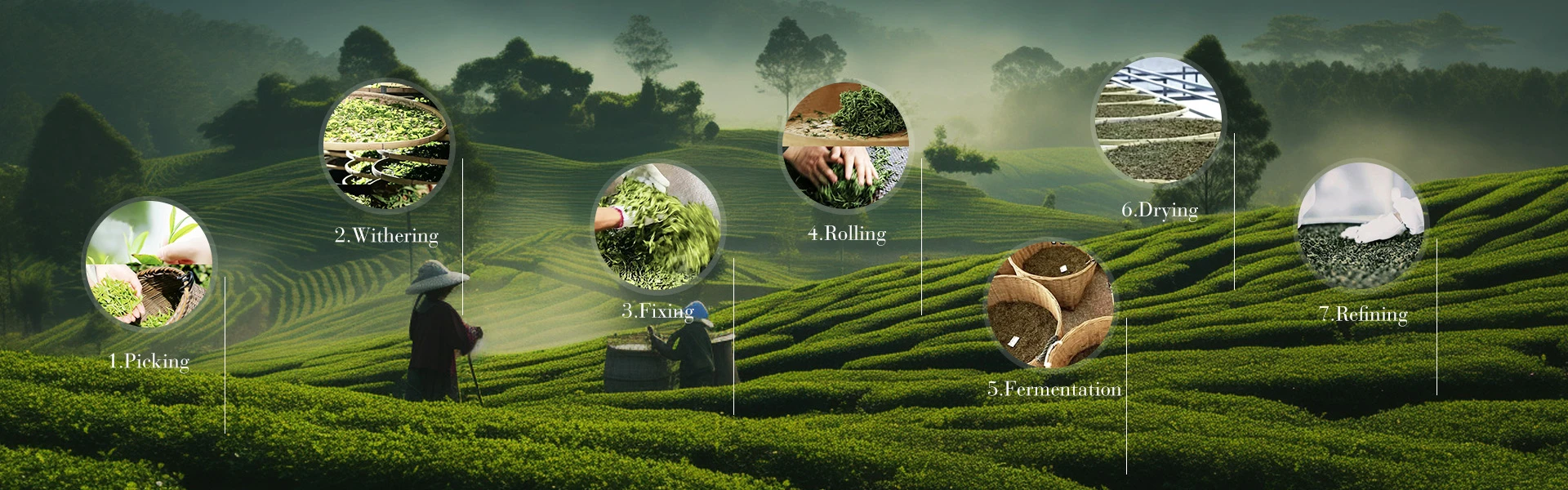
During the processing of green tea, the withering stage requires a clean, well-ventilated environment protected from direct sunlight; the leaves are spread to a thickness of approximately 2 cm and kept at a temperature below 25°C for 8 to 16 hours until they become soft, turn a dark green hue, and lose their raw, grassy odor. Fixation can be performed using continuous rotary drum, steam, microwave, or light-wave fixation machines; the process is considered complete when the raw grassy smell has vanished, the leaves have turned dark green, and the leaf texture has become soft and pliable enough to form a clump.
Guizhou Huagong Green Tea is produced from Yunnan large-leaf tea cultivars grown in the misty, high-altitude environment of the "Five Mountains" (Wushan) peaks, utilizing a combination of manual and mechanical processing techniques.
During the spring tea season, immunity-inducing technologies (such as the use of amino-oligosaccharides) and a "harvesting-as-prevention" strategy are employed to avoid the use of chemical pesticides. Tea cultivars with relatively high amino acid content are selected for green tea production, and the withering environment must be clean and hygienic to ensure high quality.