

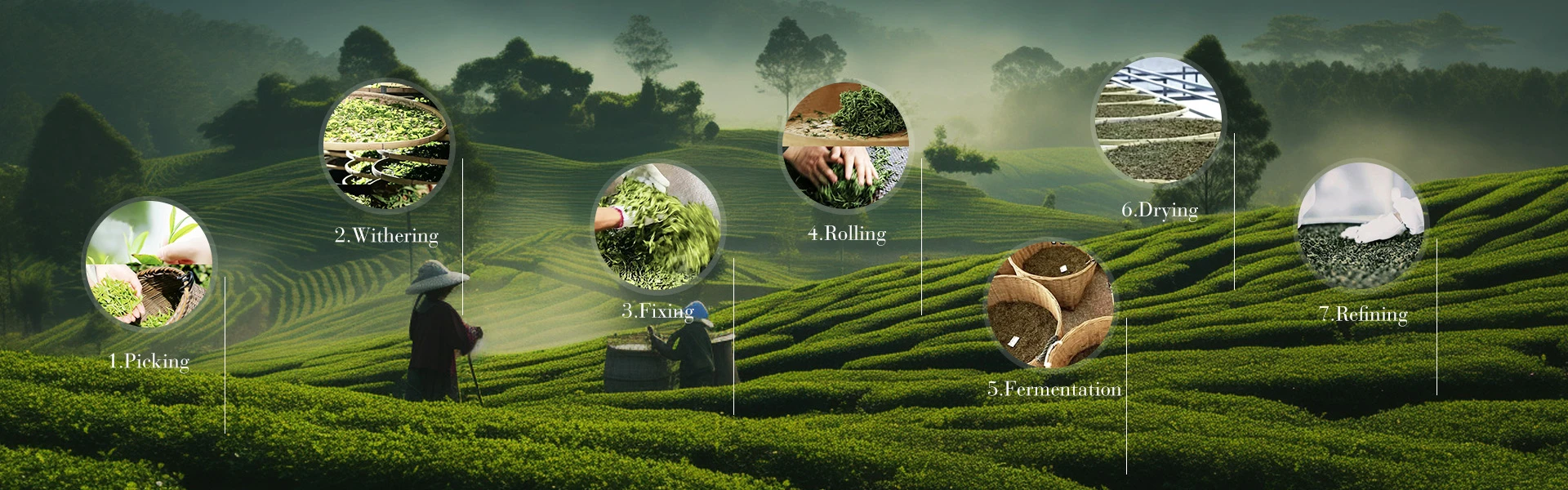
Green tea has strict requirements regarding its growing environment, and its quality is closely linked to the average annual temperature. Research indicates that while regions with an average annual temperature above 16°C yield high quantities of green tea, the quality is often inferior; conversely, regions with an average annual temperature below 14°C produce lower yields but superior quality tea. Traditional tea plantations often plant shade trees to regulate sunlight exposure, a practice that boosts the amino acid and protein content in the tea leaves. High-altitude, misty environments promote the development of thick, tender leaves and enrich the tea's content of proteins, amino acids, and aromatic compounds. In northern tea-growing regions-such as those producing Rizhao Green Tea-the cold climate causes leaves to thicken and deepen in color; these teas boast a high concentration of soluble solids (up to 46%) and can withstand more than six infusions.
Green tea quality varies significantly by season: spring tea is rich in proteins and amino acids, resulting in a bright green liquor and uniform green spent leaves; summer tea contains higher levels of polyphenols, often leading to a faint aroma and bitter taste; and autumn tea falls somewhere in between. From a wellness perspective, green tea is considered "cool" in nature, making it ideal for relieving summer heat.