

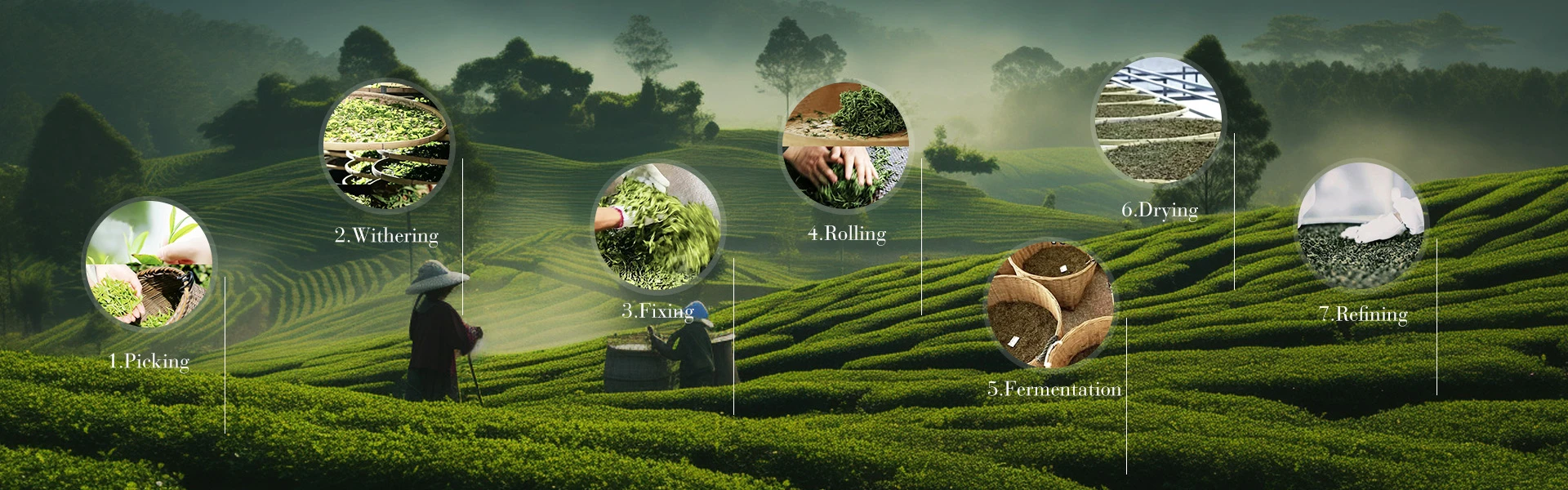
Green tea is one of the six major categories of tea and is classified as a non-fermented tea. It derives its name from the fact that the dried leaves retain the green or yellowish-green color of the fresh leaves. It is typically produced through processes such as fixation (de-enzyming), rolling, and drying; the core step is fixation, which uses high heat to deactivate polyphenol oxidase. Green tea is characterized by the "three greens": green appearance, green liquor, and green infused leaves. Based on the methods of fixation and drying, it can be categorized into four types: pan-fired, baked, sun-dried, and steamed green teas.
Originating in China, green tea is the earliest type of tea to appear in Chinese history and boasts a long production tradition. The steamed green tea method became popular in China during the Tang Dynasty and was subsequently introduced to Japan and adopted by many other countries; the pan-fired method was invented during the Ming Dynasty. Green tea is widely cultivated in Chinese provinces such as Henan, Guizhou, and Zhejiang, as well as in countries like Japan, Thailand, North Korea, and South Korea. It thrives in moist, warm environments but is intolerant of intense sunlight and high temperatures; fertile, loose, and slightly acidic soil is ideal for cultivation. While propagation can be achieved through seeding or cuttings, the cutting method is generally preferred. Green tea is produced in all of China's tea-growing provinces; representative premium varieties include Longjing (Dragon Well), Biluochun, Huangshan Maofeng, Taiping Houkui, Lu'an Guapian, Enshi Yulu, and Xinyang Maojian, with most premium varieties concentrated in the East China production region.
The text *Leigong Paozhi Yaoxing Jie* (Master Lei's Treatise on the Preparation and Medicinal Properties of Herbs) describes green tea as having a "slightly cold nature and a bitter-sweet taste." It possesses astringent, diuretic, and refreshing properties, and is used to treat conditions such as mental fatigue and excessive drowsiness, headaches and blurred vision, intense thirst, urinary difficulty, and alcohol toxicity. Green tea is prized for its high aroma, lingering taste, and excellent quality; its unique appearance also offers significant aesthetic value. Glassware is typically recommended for brewing green tea at a water temperature of 80–85°C, as this range best preserves its antioxidant properties. With its attractive appearance and fresh, brisk flavor, green tea is the most popular variety among Chinese consumers and accounts for the largest share of tea exports.